Project to Support the National Reconciliation Process
An ongoing project aimed at supporting the national reconciliation process by building local mediation networks and strengthening dialogue…
Details
A strategic national track launched in April 2018 after more than three years of consultation and 460 hours of dialogue, culminating in the Libyan Social Contract: the governing principles for living together and for the country's stability.
A strategic national programme and track carried out and launched by the Libyan Peacemakers team in April 2018, after more than three years of consultation and over 460 hours of dialogue.
The programme seeks to unite Libyans and mend the social fabric through an inclusive document drafted entirely by Libyans: social, political and media leaders, academics, young people, religious figures, and representatives of civil society, women, tribes and unions from cities and regions across Libya.
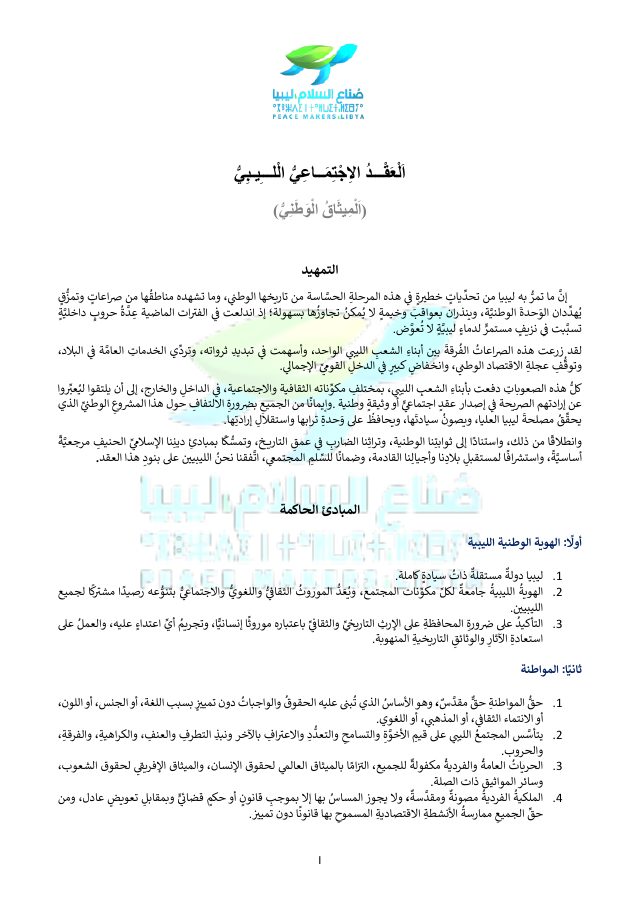
These efforts culminated in "The Libyan Social Contract (National Charter)", which sets out the governing principles for living together and for the country's stability.
The projects and initiatives run under this programme.
An ongoing project aimed at supporting the national reconciliation process by building local mediation networks and strengthening dialogue…
DetailsRead or download the documents produced by this programme.
An inclusive charter drafted by Libyans from across the country after more than 460 hours of dialogue. It sets out the governing principles for living together: national identity, citizenship, good governance, national security…